

by Scotty Kyle
I grew up on the west coast of Scotland and often visited a small fishing village on holiday. We would go out on the fishing boats for day trips, where we would catch herring in large quantities close to shore. Over the years the trips got longer, and the catches dwindled – then stopped. The fishers changed to trawling for Norway lobster but in a few years the same happened. The village is now a holiday destination with almost no fishing.
There are many similar examples of stock collapse, local extinctions and alien fish devastating fish communities all over the world. We humans are just too efficient, but that’s because we’re (mostly) intelligent. We have amazing powers to intervene with natural processes and systems, modify and rectify watercourses and add, or remove, fish as we deem necessary.
If we’re driven by greed and demand, our influence can be devastating. But if we use our powers for the good cause, we can fix a lot of what we did wrong. In North America, and elsewhere in the world, there are excellent examples of good fisheries management where ever increasing fishing pressure has been addressed and stocks are good or even improving.


Click to read more stories by Scotty Kyle.
Just How Bad Can Mismanagement of Fisheries Get?
I often give presentations to students from the UK. True to the stereotype, they tend to adore the British fish-and-chips. And I always ask them what fish they think is in the dish. They usually answer “haddock”, but they are mostly wrong.
Haddock used to be the preferred species decades ago, but then stocks were depleted and so cod became the target. Then cod stocks in turn were depleted, and fishing moved to saithe, pollack, lithe or anything else available that was vaguely acceptable. So when my students’ grandparents complain fish-and-chips aren’t what they used to be, that’s not just “old people talk”, it’s a fact.
Sadly, fish-and-chips isn’t the only example. The same grandparents, when they were in their twenties, could order “jellied” eels with their chips. Now eels are listed as “critically endangered” in the UK, and that dish is off the menu. Salmon used to be given to estate workers in Scotland, as an available and cheap form of protein. Catching a wild salmon nowadays is expensive and, quite frankly, unlikely, in most rivers of the British Isles.
Can We Still Help Fisheries?
Short answer: Yes. But the world is big, its fisheries are diverse, and the problems are challenging. They say the best way to eat an elephant is one bite at a time and this needs to be applied here. We need to split it into its components and deal with each the best way we can.

That Dam Problem
Humans consume an ever increasing amount of water. Water is essential for our personal needs, as well as agriculture, industry – including those huge data processing centers that helped bring this text onto your screen – and, of course, it’s absolutely vital to fish. Unfortunately, we used to focus almost all the attention on the first three, and facilitated water production without considering the bigger picture: the environment.
Dams have been essential in the economic race between the West and the Soviet Union, providing immense amounts of electric power for industry, and a supply of water for irrigation. Nobody could really foresee what the price for the environment would be. A dam slows the current; the water often becomes warmer and murkier. The original flora and fauna may be ill adapted to such an environment and will be displaced by species that thrive under those conditions.
This is a relatively harmless effect, compared to what dams do to species that travel up and down rivers for spawning, such as eel, salmon, and sturgeon. In the Russian Empire, caviar and sturgeon were staple dishes for all except the poorest households. It wasn’t after the massive dam construction in Soviet times that they became the extravagant luxury they are today.

The so-called developed countries have realized how many species and environments have been severely impacted by dams. There are excellent and reassuring examples of success and fish stock improvement, such as the western seaboard around the USA/Canada border. In some areas, crosses for salmon are being added, and some dams are being removed altogether. Before new dams are built, care is taken to identify and deal with impacts on fish.
Intelligence has been described as “behaviour change in the light of experience” and that is where we are now, or at least where we should be. In less-developed places dam construction is often done as recklessly as in the “first-world” countries a century ago. Little care is taken or investigation is carried out, as the need for dams is paramount. The removal of vast numbers of people is seen as necessary and concern over fish is not on the radar. People in these countries, and all over the world, must now pressure the decision-makers around dam building, as well as highlight fisheries concerns in the international context.
The Not So Bottomless Ocean
90% of the largest fish in the world’s oceans have already been killed. That’s what one often reads these days, and, while I have no idea how they got that figure, it does reflect my experience as a fish researcher. And it’s scary.

More and more nations are joining in the struggle to protect the fish resources of the oceans. Unfortunately, some less developed countries see the fish in their coastal waters as a trading coin. They may not have the resources to properly exploit them, so they give the rights to do so to another country, in exchange for assistance with road, dam or airport building. Some richer countries, such as China, use this approach to feed their own populations.
There often is, however, little concern about fish populations, or monitoring of the fish, and stocks can be rapidly depleted. Voters in the poorer country see the roads and airports, but not the impact on the fish stocks. Mozambique, which used to have important coastal fisheries, is an example of this and many countries are taking this approach.
Oceanic fish stocks have also plummeted in recent times. While many states have been doing a very good job of protecting their own stocks, they are usually powerless when it comes to international waters. And there are independent fleets of fishing boats prepared to go anywhere to seek out and exploit fish reserves.
About fifteen years ago, abundant stocks of Patagonian toothfish were found around isolated “sea mounts” in the open ocean. Within a few years these ocean-roving fishers had wiped out nearly all the fish. Who would have known that this species takes decades to reach maturity, so after you’ve caught all mature individuals, the population will not recover anytime soon! We need international and enforceable treaties and laws to protect fish in international waters.
The Dangers of Migration
Humankind has been moving around the globe since we’ve evolved as a species, and we often take other animals and plants along. Alien fish species have been introduced to waters throughout the world, sometimes with surprisingly positive outcomes. Introduction of trout to Patagonia was a success story, as the fish occupied an “environmental niche” that was empty before, and extensive sport and commercial fisheries have developed.
In other locations where trout have been introduced, however, their effect was both positive and negative. In New Zealand and especially South Africa, there must have been a severe impact on indigenous species, when new top predators were introduced. But in these two countries, management is in place to try and deal with issues that might arise.
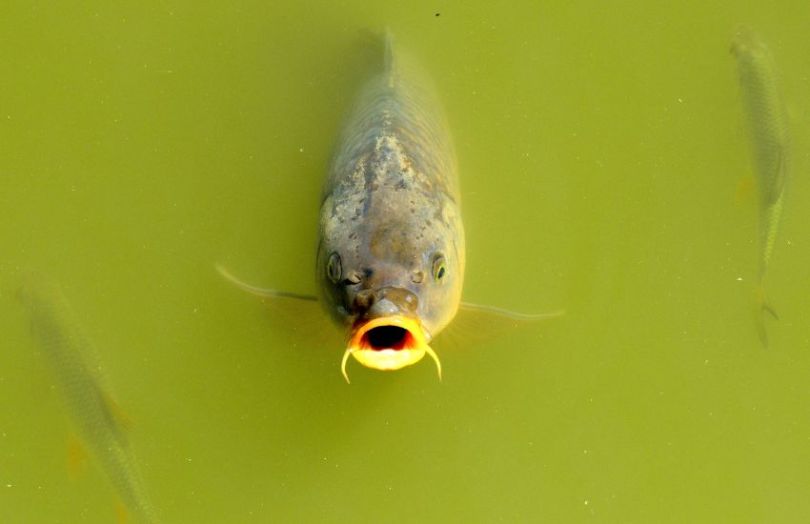
Alien fish can wreak havoc in unexpected and unpredictable ways, such as the silver carp in much of the Mississippi catchment. Carp have been introduced in many countries but, while not top predators, they can change water quality by their feeding habits and become super-abundant and impossible to remove.
With what we know now, all live fish movement should be minimized, and new introductions should by default be prohibited, unless, after a serious study and a rigorous process it be ensured, that no serious negative, irreversible outcomes result.

What Can You Do?
We love our fishing, and we want our children and grandchildren to enjoy the same pleasure. Our efficiency and intelligence, when applied to good management instead of plundering natural stocks, can often reverse trends, arrest stock depletion and, sometimes, improve our fishing experience.
What you can do as an individual may seem small and irrelevant, but if many people act together, we can achieve a lot. I’m saying it as a participant of several initiatives that managed to stop some harmful development projects – in South Africa, of all countries! The least you can do is keep yourself informed. Encourage politicians to choose long-term benefits for the environment over short-term economic gains. Try to source the fish you buy from sustainably managed fisheries. When fishing, abide by all rules and regulations, and book your fishing trips only from operators who adhere to sustainable fishing practices. You can find those on BaitYourHook.com!
P.S. Now that we know why we need to manage fisheries, the next logical question is how we do it. One of the most important tools are rules and regulations for recreational and subsistence anglers, such as bag and size limits. In the next blog in this series, I tell you more about that – including a few real life cases of how seemingly logical and rational rules proved to be dead wrong as new scientific data arrived. Click to read!
More on the topic:


“I said that the Chief had now put a reward onto the fish”: Fish Tagging and Fishery Management in Africa and Beyond.
By Scotty Kyle
If we are passionate about fish and fishing, we have to accept that some management is always necessary. Except for a very few isolated localities, which most of us will never see, fishermen can’t simply catch and kill fish of any size at any time by any method and in any numbers. CONTINUE READING


One comment