

For many American anglers, carp are the fish that muddy the shallows, invade duck marshes, and occasionally get shot with arrows under floodlights. The common carp has indeed had a complicated history in North America: it was introduced widely in the 19th century, spread across much of the continent, and is often blamed for uprooting aquatic vegetation and increasing turbidity in shallow waters.
In Europe, however, the same fish gets a rather different reception. There, common carp are not merely tolerated. They are studied, named, baited for days, photographed on padded mats, discussed in forums with the seriousness normally reserved for nuclear diplomacy, and released as if they were visiting royalty. Europe gave the world Gothic cathedrals, complicated cheese, and one of the most obsessive freshwater fishing cultures on earth: modern carp fishing.


The Fish: Not “Asian Carp,” Not a Trash Fish, and Definitely Not Easy
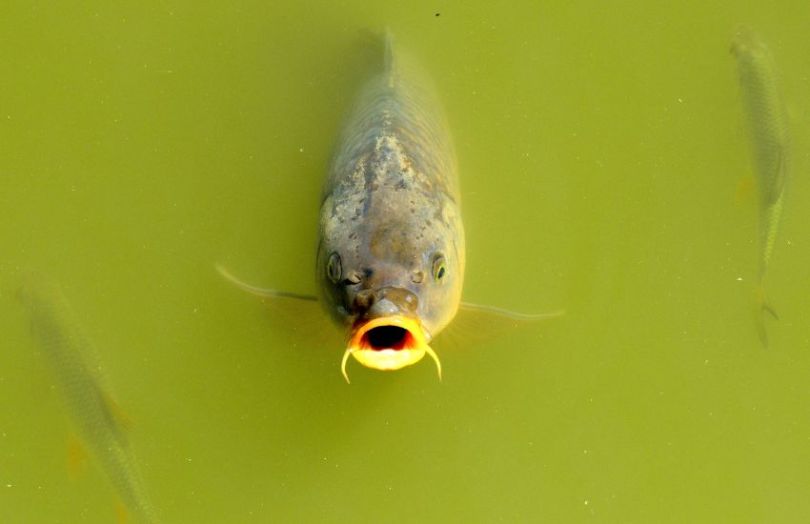
The fish at the center of this story is the common carp, Cyprinus carpio. It is native to Europe and Asia, with the Danube basin playing an important role in its European history, and it has been farmed, moved, stocked, and argued about for centuries. In Europe, common carp became both a food fish and a sport fish long before bass boats, braid, or YouTube thumbnails with shocked faces existed.
The first thing a North American angler has to understand is that European carp fishing is rarely about catching “some carp.” It is about catching one particular carp, from one particular lake, at one particular weight, under rules that may include unhooking mats, antiseptic, barbless hooks, bait limits, landing-net specifications, and sometimes a level of fish-care ceremony that would make a trout guide look like a barbarian with a stringer.
This is not because Europeans have too much free time, although that charge may stand in court. It is because big carp are old, wary, powerful, and very capable of making a skilled angler look foolish.

The European Carp Mindset
If you fish for largemouth bass, you move. You cover water. You pitch, flip, burn, pause, change lures, curse, change rods, and blame the moon. European carp fishing often works the other way around. You choose a swim, study the bottom, prepare your baiting strategy, set your rigs, wait, watch the water, drink tea or something stronger, and allow the carp enough time to make its own disastrous decision.
The core idea is simple: carp feed heavily on or near the bottom, often using smell, taste, touch, and suction more than a dramatic predator strike. Bait presentation must therefore be subtle. The carp should find food, suck it in naturally, and discover only too late that the small innocent-looking offering is attached to a person in a bivvy who has been waiting 14 hours for this exact betrayal.
It is fishing, yes — but with more luggage.

The Gear: Rod Pods, Bite Alarms, and Other Signs of Civilization
A basic European carp setup usually starts with long rods, often around 12 feet, with enough backbone to cast heavy leads and stop large fish, but enough give to play them safely. Beginner-oriented European tackle guides commonly recommend two 3.60 m rods of about 2.75–3 lb test curve, 5000–6000 size free-spool reels, mono line around 0.30–0.35 mm, hair rigs, bite alarms, swingers, and proper fish-care gear such as a landing net and unhooking mat.
To an American bass angler, the rod pod may look like something stolen from a surveyor. To a European carp angler, it is the altar. Rods rest on it, bite alarms sit beneath the line, and little indicators called bobbins or swingers show whether the fish is moving away, toward you, or simply playing emotional games.
The bite alarm is one of the defining symbols of European carp fishing. Instead of holding the rod all day, the angler sets the rig and waits for the line to move. When a carp picks up the bait and moves off, the alarm screams. At that moment, the peaceful lakeside philosopher becomes a very awake human in waterproof trousers.

The Hair Rig: Europe’s Great Contribution to Hook-Related Deception
The hair rig is the foundation of modern carp fishing. Instead of putting the bait directly on the hook, the bait hangs on a short “hair” beside the hook. The carp sucks in the bait naturally, and when it tries to blow it back out, the hook turns and catches hold. The hair rig can be used with any bait that can possibly seduce a carp, and comes in many different forms depending on bottom type, hooklink, lead system, and presentation.
Common baits include boilies, pellets, sweet corn, tiger nuts, hemp, maize, bread, worms, and various particles. Boilies are perhaps the most iconic: round, flavored, boiled bait balls that can be bought in more flavors than most respectable adults need to know exist. Fishmeal, krill, scopex, strawberry, garlic, liver — somewhere in Europe, a man is sniffing a bait tub and saying, “Yes, that’s the one.”

Baiting: Feeding the Swim Before You Fish It
In much of North American freshwater fishing, feeding fish before trying to catch them can feel suspiciously like cheating. In European carp fishing, it is a strategy.
If you fish in public waters, you might start doing that well before the season, to get the carp feeding comfortably in a selected area (which you keep in secret like nuclear bomb blueprints). But even in a private pond, your carp fishing begins with baiting. This may mean anything from a handful of corn and pellets to kilos of boilies and particles. And to help place the bait exactly where you want it, you will need tools.
Tools vary. A catapult can fire bait to moderate range. A throwing stick launches boilies. A spod or Spomb sends larger payloads. Some venues allow bait boats, which carry rigs and bait to precise spots by remote control. This is where the European carp angler begins to look less like a fisherman and more like a small-scale logistics manager.

European carp venues can have more rules than a homeowner association, except the residents weigh 50 lb and eat tiger nuts. Some lakes permit bait boats; others ban them. Some require on-site bait. Some restrict the size of particles, or prohibit certain ingredients. Check out the rules before you bait. Then bait. Then cast your hair rig into the middle of the baited area, and… and wait.
Fishing: The Wait, the Take, and the Hook Set
The Orient has ashrams. Western Europe has carp fishing. Staring at motionless rods for hours is truly meditative, although you may need to achieve a certain degree of enlightenment to actually enjoy hours of nothing happening. A comfortable chair is an essential part of a carp angler’s gear set.
In old-school float fishing, the drama may indeed happen under your eyes. Carp feed by vacuuming rather than striking, so the float may not simply disappear like it does with a perch or bluegill. Sometimes it trembles. Sometimes it rises and lies flat. Sometimes it slides sideways with the suspicious caution of a burglar testing a window latch. In modern carp rigs with bite alarms there may be no float at all, but you would usually add a small weight, known as a bobbin, to the line. And the bobbin usually moves a bit before the alarm screams – a 21-century float, if you will.
That is the equivalent of the bad guy’s hand flipping the tailcoat aside and hovering over the worn handle of the six-shooter in a Western. A moment of utter tension. A stand-off that lasts a couple of seconds but feels like eternity. You do not want to strike too early, because the fish may only be mouthing the bait. You do not want to wait forever, because the carp may feel something wrong and blow the whole thing out like a food critic rejecting a cheap oyster. When the float begins to move with purpose, that is when you draw — I mean, set the hook.
With many bolt-rig presentations, the carp partly hooks itself against the weight of the lead. Which means you don’t have to whip your rod about like a halberd. Pick up the rod, tighten into the fish, and lift firmly. The hook is usually already where it needs to be; your job is to make contact, keep pressure, and not turn the first three seconds into a disaster.
And the fight begins. But unlike the classic Western, it will not be over in a second.

Fighting the Carp: Heavy, Stubborn, and Not Impressed by You
A hooked carp does not usually explode into the air like a tarpon or charge off like a tuna. It does something much more European: it applies steady, determined resistance and refuses to cooperate.
The first run is often the most dangerous. A big carp may head straight for weed, reeds, sunken branches, or any other unpleasant place where hooks go to die. Keep the rod up, maintain steady pressure, and use side strain to steer the fish away from trouble. Do not lock everything down unless you absolutely must; a tight drag and a sudden lunge can part the line, pull the hook, or break something expensive.
The fight is a balance between pressure and patience. Give line when the fish surges. Gain line when it slows. Keep the rod bent and the line tight. As the carp comes closer, be ready for one last dirty trick under the rod tip: a dive, a roll, or a turn toward the nearest snag.

Use a large landing net and guide the carp over it head-first. In proper European carp fishing, you do not drag the fish onto gravel or swing it ashore like a crappie. The carp goes onto a wet unhooking mat or cradle, the hook comes out carefully, the photo is taken quickly, and the fish is released when it kicks strongly.
That is part of the ritual. In Europe, especially on trophy waters, a big carp is not just “a fish you caught.” It may be a known resident, caught before and hopefully caught again. And when it swims away, you understand the whole strange business a little better: the baiting, the waiting, the alarms, the rules, the mats, and the almost religious seriousness.
Carp fishing is not fast. It is not simple. It is not always exciting in the conventional sense.
Until suddenly, gloriously, it is.

What Makes a Carp a Trophy?
This depends on where you fish. In many North American waters, a 20 lb common carp on rod and reel is already a very respectable fish. In Europe, especially on managed carp lakes, the numbers are different.
A 30 lb carp is a good fish. A 40 lb carp is serious. A 50 lb carp is a proper trophy. A 60 lb carp is a myth, a legend, out of the realm of famous lakes and fish that have proper names.
Weight matters, but it is not everything. European carp anglers also care about condition, shape, scale pattern, strain, and history. A perfect old common carp from a difficult public water may mean more to a purist than a heavier fish from a stocked lake.
Where to Fish for Carp in Europe
European carp fishing happens in several very different worlds.
The first is the local pond, canal, reservoir, or slow river. This is where many European anglers learn: simple rigs, modest carp, short sessions after work, and the occasional surprise fish that ruins a light rod.

The second is the public big-water scene: large reservoirs, rivers, gravel pits, and natural lakes where the carp may be wild or long-naturalized. These waters can produce serious fish, but they demand local knowledge. Finding carp in a 2,000-acre reservoir is not the same as finding bluegill under a dock.
The third is the private trophy lake. This is the famous European carp-holiday model, especially in France, Hungary, Belgium, the Netherlands, Spain, Portugal, and parts of Eastern Europe. These waters are managed for carp fishing. Some are commercial fish farms that let recreational anglers in as a side business, others are dedicated sport angling venues. Both are locations where you know the fish is there. It’s getting it out of its element that is a problem, especially if we’re talking big carp that might have already been caught and released several times.
France is probably the classic destination for a carp holiday, while Austria and Hungary have become famous for giant carp venues. Portugal and Spain offer warmer-weather carp and mixed freshwater fishing, often alongside barbel, zander, and bass. But all in all, a stocked carp pond is a stocked carp pond wherever you go. With the exception of über-regulated Germany, you might simply select the venue nearest to you, regardless of the country.

Best Times for Carp Fishing
Carp are catchable for much of the year, but “catchable” and “worth flying across the Atlantic for” are not the same thing.
Spring is often excellent once the water warms. Carp become more active, start moving into shallower areas, and feed after the cold months. Early to mid-spring can be very productive, but spawning complicates the picture. When water temperatures reach roughly 18–22°C (64–72°F), carp may gather in shallow, weedy areas to spawn, and responsible anglers usually leave them alone during the actual spawning period.
Summer can be very good, especially early morning, evening, and night. Hot, still, bright days can slow the fishing, particularly in shallow lakes where oxygen levels drop. Autumn may be the finest season for big carp. The fish feed heavily before winter, weed begins to die back, and fewer casual anglers crowd the banks. Winter is harder. Carp still feed, but less often, and locating them becomes more important than baiting heavily.
In short: for a traveling angler, April–June and September–October are often the sweet spots in much of Europe, with exact timing depending on country, weather, water temperature, and venue rules.

Licenses, Rules, and Fishery Etiquette
Europe is not one country, despite what Americans sometimes suspect after looking at the size of the cars. Rules vary by country, region, waterbody, club, and private fishery.
Public waters often require a national, regional, or local fishing license. Some countries make the process fairly easy. Others require club membership, local permits, or paperwork that proves bureaucracy is alive and well. Private fisheries may include access in the booking price, but you still need to check what is legally required.
Fishery rules matter. Read them before you fish. They may cover rod limits, bait limits, hook types, main line strength, leaders, landing nets, unhooking mats, antiseptic, retainers, night fishing, boats, bait boats, alcohol, guests, dogs, and photography. At some major venues, fish-care equipment such as cradles, landing nets, and weighing systems is specified or provided.
The unwritten rules matter too. Do not cast into someone else’s water. Do not walk loudly behind occupied swims at midnight. Do not handle a big carp on dry ground. Do not keep a trophy fish out of water while you stage a heroic photo essay. And never say, within earshot of a serious European carp angler, “So, do you eat them?” unless you enjoy silence.

Is European Carp Fishing for You?
If you need constant casting and instant action, a week of European trophy carp fishing may test your soul. Carp fishing rewards patience, preparation, observation, and the ability to remain optimistic while staring at three motionless rods in light rain.
But when it works, it is magnificent. The alarm screams, the bobbin slams up, the line pulls tight, and suddenly the quiet lake becomes very alive. A big carp does not usually jump like a tarpon or sprint like a tuna, but it has deep, stubborn, heavy power. It will use weed, snags, margins, and its own weight against you. At the net, when the bronze flank rolls up in the headlamp beam, you understand why Europeans built an entire culture around this fish.
For a North American angler, European carp fishing is part technique lesson, part cultural exchange, and part humility exercise. You may arrive thinking carp are simple. You may leave pricing bite alarms, discussing boilie diameters, and wondering whether you too need a bivvy.
That is how they get you.
Next in ‘Fishing 101’


Fishing 101: How Heat Changes Fish Behaviour and Tips for Summer Fishing
Summer is closer than it looks on the calendar; in some areas, temperatures are already climbing into that range where life without air conditioning is possible, but miserable. And with the heat in the air, the action in the water seems to switch off; the fish is lazy, won’t bite, and in general just isn’t there. Or is it?
Let’s take a look at how rising temperatures really affect fish, what happens inside their bodies, how they react, and what you can do to catch those mid-summer fish. CONTINUE READING

